Create proximity timetables with Neotravv
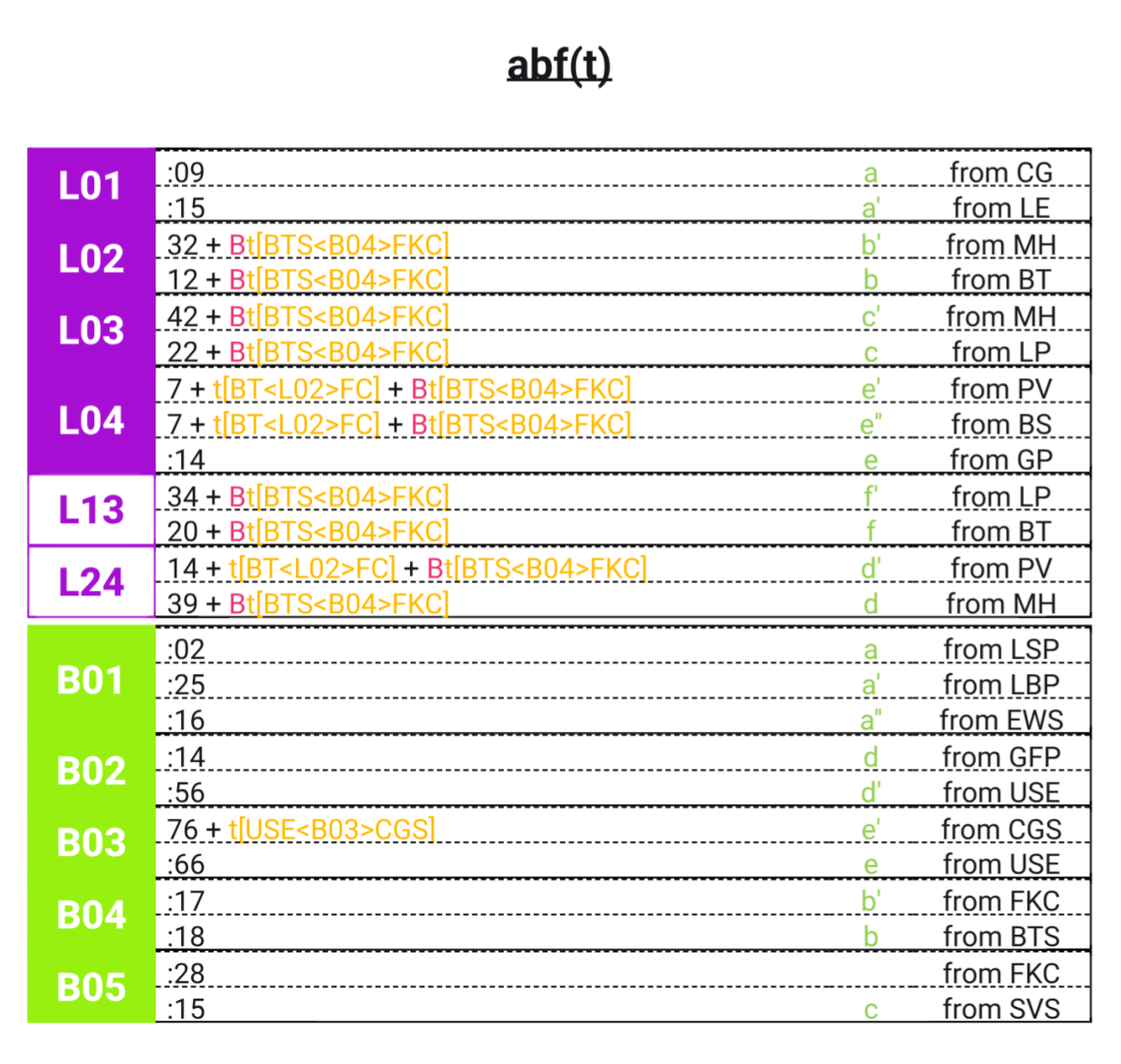
Purpose of proximity timetables
A well-structured timetable is the backbone of any functioning public transport system. Creating timetables is often complex, time-consuming and requires a large amount of data. Since these are not always available from the start of the planning process, proxoimity timetables can help develop realistic schedules quickly and efficiently, even without complete detailed data.
What is a proximity timetable?
A proximity timetable describes a simplified model of a timetable, in which departure times, intervals and runs are defined on the basis of assumptions and regularities. Instead of calculating each individual journey exactly, patterns, intervals and connections between lines are used. These can then be supplemented with travel times.
The goal is to create a functioning and logical overall system that can serve as a basis for further planning steps.
How do you create an approximate schedule?
Neotravv includes a tool (timetable development) and an integrated development environment for programming proximity timetables. Programming is based on the internal language "Nodus" (syntax). All lines and relevant departure times are defined in an .ldef file, categorized by line type. Optionally, the route network for a specific line type can be divided into route segments if the precision of service intervals within those segments is more important than the precision of individual line departure times.
The individual intervals of the lines or route sections are then defined in a .tdef file (one file for each line/route section).
For example, a proximity timetables could look like this (B01):
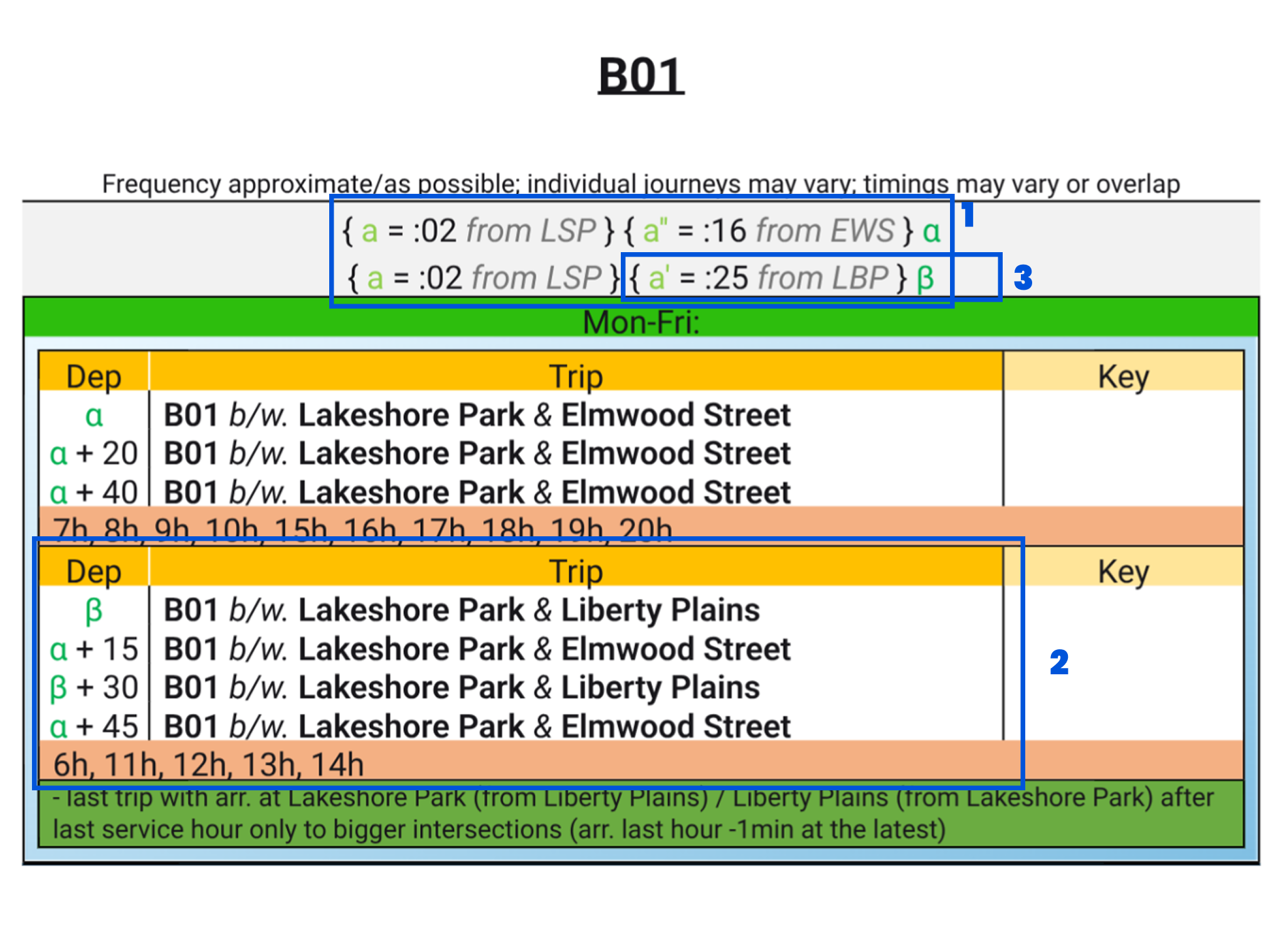
The times shown in 1 are the departure times that could be calculated from the defined relationships. If not all required variables are known, no clear value can be given at this point.
In 2, a 15-minute-interval is described, which applies at 6:00 and from 11:00 to 14:00 inclusive. Every second vehicle on line B01 travels only between Lakeshore Park (LSP) and Elmwood Street (EWS) within this cycle, instead of serving the entire route to Liberty Plains (LBP).
The specified value for β of Liberty Plains (see 3) is greater than the specified interval. Therefore, the departure time of the first vehicle is being changed: it will not start at :25, but at :10 (25 - 15 = 10).
Easy creation of proximity timetables
With our Proximity Timetable Creator, the development of such timetables is significantly simplified. The tool allows you to define lines, departures, intervals, and dependencies in a structured way and to develop a consistent timetable system from them.
The ability to map relationships between different lines, such as connection relationships or temporal dependencies, is particularly practical. This results in realistic and well-coordinated timetables.
Check out our YouTube tutorial and our handbook to better understand how proximity timetables can be created.